Tap to View
𝗖𝗢𝗟𝗟𝗘𝗚𝗘 𝗡𝗘𝗪𝗦 | LPC empowers Leaders on the Evolving Educational Landscape and Relevant Governance in the 21st Century
Date Posted: Oct. 31, 2026
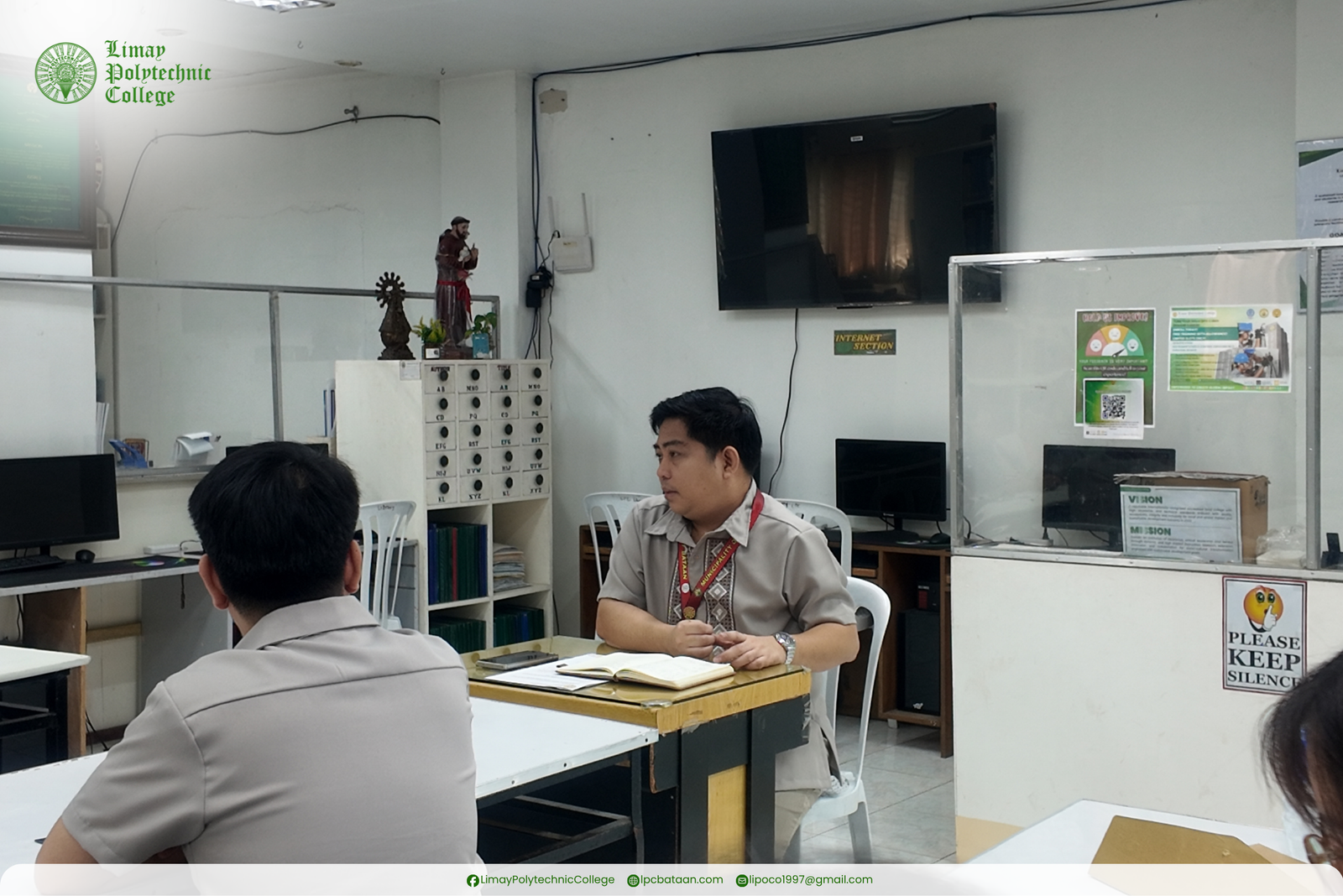
Limay Polytechnic College (LPC) President Dr. Elmer B. De Leon convened the members of the Management Committee (ManCom) and their staff on October 22, 2026, at the College Library to emphasize the need for a paradigm shift, an adaptive leadership mindset, and responsive institutional governance in navigating the evolving educational landscape of the 21st century.
During the meeting, Dr. De Leon presented emerging educational paradigms, regulatory policy developments, and institutional challenges brought about by rapid changes in higher education.
He underscored the importance of keeping LPC prepared, responsive, and relevant while ensuring that its policies, systems, and programs remain aligned with current national and international standards.
Among the significant developments he discussed were the initial drafts of the proposed new CHED Memorandum Order (CMO) on the establishment and sustainability of local colleges, which is undergoing public consultation, and the proposed Local College Governance Act, which has reached its third reading in Congress.
These policy developments were highlighted as important considerations in strengthening the governance, institutional identity, and long-term sustainability of local colleges.
Dr. De Leon also oriented the ManCom on the revised Philippine Qualifications Framework (PQF), Polytechnic Education System, CHED's mandate concerning the community college framework, multiple career pathways, and the development of future-ready and future-proof learners.
He further emphasized flexible and alternative learning arrangements, microcredentialing, lifelong learning modalities, and the increasing relevance of international standards and globalization in higher education.
In response to these developments, LPC is expected to continuously review and recalibrate its institutional directions.
He further stressed incorporating PQF in their governance and delivery of services by reminding them to explore and obtain knowledge with full understanding to be applied in their respective line of work responsibly, ethically and accountably.
While the College has already initiated plans, policies, and frameworks addressing many of these emerging priorities, the President stressed the importance of moving progressively toward more flexible, non-conventional, and learner-responsive educational approaches.
Technology integration and full digitalization likewise, remain essential institutional priorities in improving operational efficiency, academic delivery, and institutional competitiveness.
The discussion also provided an opportunity for the ManCom to reflect on the lessons drawn from LPC's institutional experience in history, assess its present conditions, and determine future directions.
With ongoing developments supported by appropriate policies and frameworks, Dr. De Leon expressed confidence that the College could gradually transition toward more responsive systems and practices aligned with national and international benchmarks.
As the institution navigates an increasingly competitive and rapidly changing environment, the President challenged the Management Committee to sustain its commitment to innovation, institutional readiness, and collaborative leadership.
“Let us continuously strive to thrive in this competitive and challenging time. Together, we shall remain relevant with time and aligned with the standards for us to survive,” Dr. De Leon emphasized as he reiterated some ways forward.
Through this continuing leadership and management development initiative, LPC reinforces its commitment to responsive governance, continuous quality improvement, and transformative education—ensuring that the institution remains relevant, resilient, and prepared to serve the needs of the next generation of learners. #
#SDG4QualityEducation